Guide · 6 min read
A Simple Homeschool Weekly Routine That Works
A homeschool weekly routine is a repeating rhythm of lessons, together subjects and free time, planned on one page. Keep reading, writing and math short and daily, teach other subjects together as unit studies, and record attendance as you go.
Build a homeschool weekly routine that works: plan the week on one page, keep core skills daily, record attendance and add a sample week for mixed ages.

One of the joys of homeschooling is freedom: you choose what to learn, when and how. But freedom without any rhythm can quickly turn into days where nothing quite gets done, or into the opposite, where you try to copy a school timetable and everyone feels stressed. A simple weekly routine sits comfortably in between. It gives each day a shape, leaves room for curiosity, and makes record keeping almost automatic. This guide shows how to build one with a few printable pages.
Why choose a rhythm, not a rigid schedule?
Instead of planning every hour, think in blocks. Most homeschool families find that learning goes best in the morning, with lighter activities, outings and free play in the afternoon. A rhythm might look like this:
- Morning basket together: reading aloud, memory work, a poem or a short discussion.
- Core skills: math and reading or writing for each child, often one-to-one.
- Together subjects: science, history or geography, taught to all ages at once.
- Afternoon: projects, nature walks, art, sport, chores and free time.
The order stays the same each day, but the length of each block can stretch or shrink. That predictability helps children settle quickly, while the flexibility keeps the day relaxed.
How do you plan the week on one page?
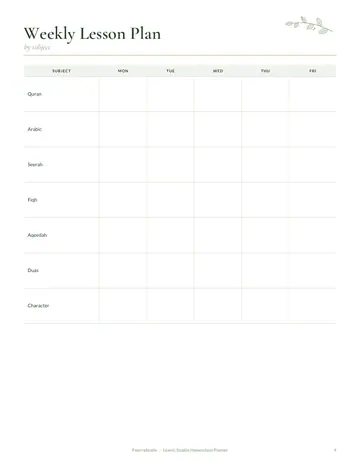
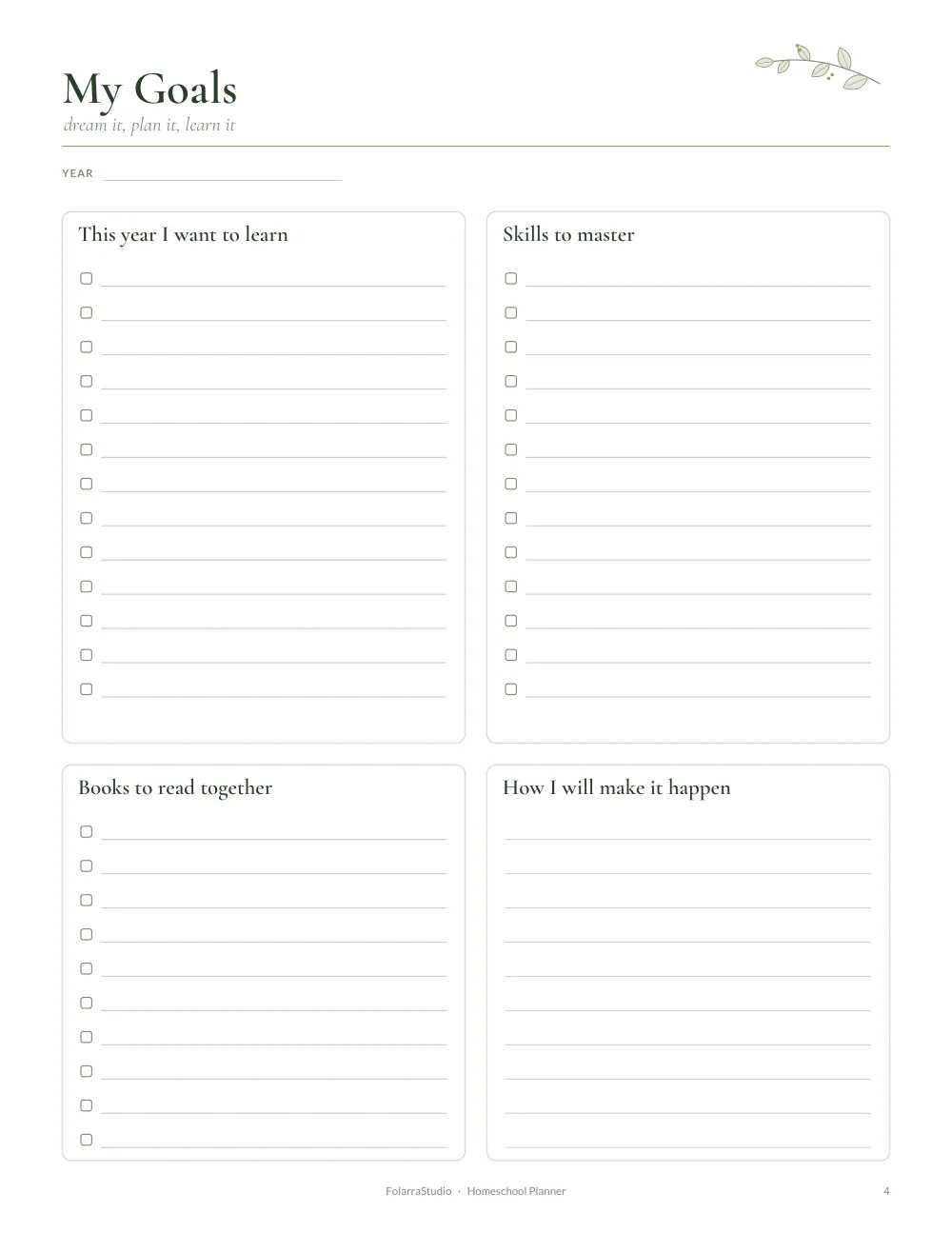
Choose one time each week, such as Friday afternoon or Sunday evening, to plan the next week. Use the weekly page in the Homeschool Planner, with a row for each subject or child and a column for each day. Write only what matters:
- The next math lesson numbers or pages for each child.
- The reading book or chapters.
- One or two together topics for the week.
- Any outings, co-op days or appointments.
Keep the plan light. If you write a lesson for every subject every day, one sick day can throw the whole week off. Many families plan four days of lessons and keep the fifth day for catching up, field trips or projects.
Which subjects can you teach together?
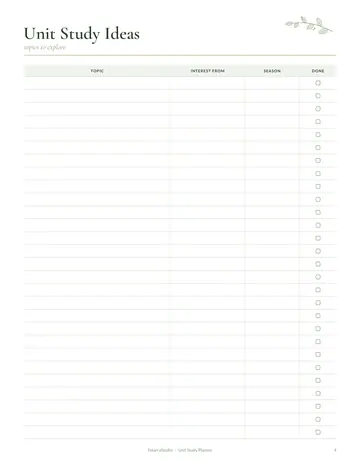
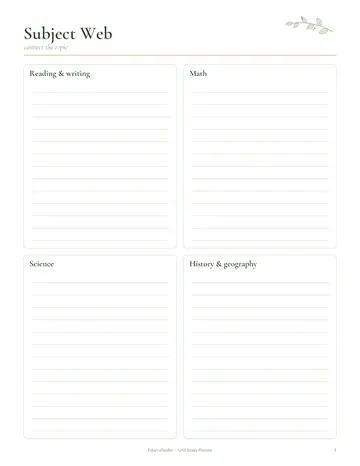
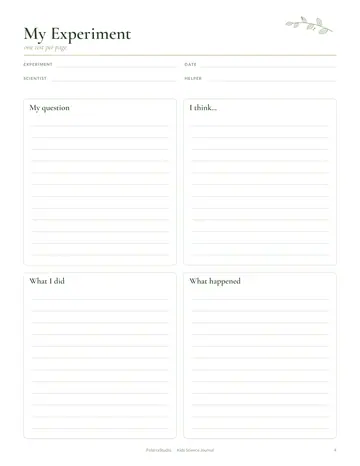
Teaching science and history to several ages at once is much easier with unit studies. Pick a theme, such as weather, ancient Egypt or the human body, and plan two to four weeks around it. A Unit Study Planner lets you list books, activities, experiments and field trip ideas in one place. Younger children draw and narrate, while older children write reports and do extra reading on the same topic. Our report templates and the Kids Science Journal give each child a simple format to record what they learned.
Keep core skills consistent
Math and reading benefit from a little practice every day. Short, focused lessons of fifteen to thirty minutes, depending on age, work better than long sessions. A Math Facts Tracker makes progress visible, and children enjoy coloring in each fact family they master. For reading, keep a simple list of books finished, which also becomes part of your records.
Record attendance as you go
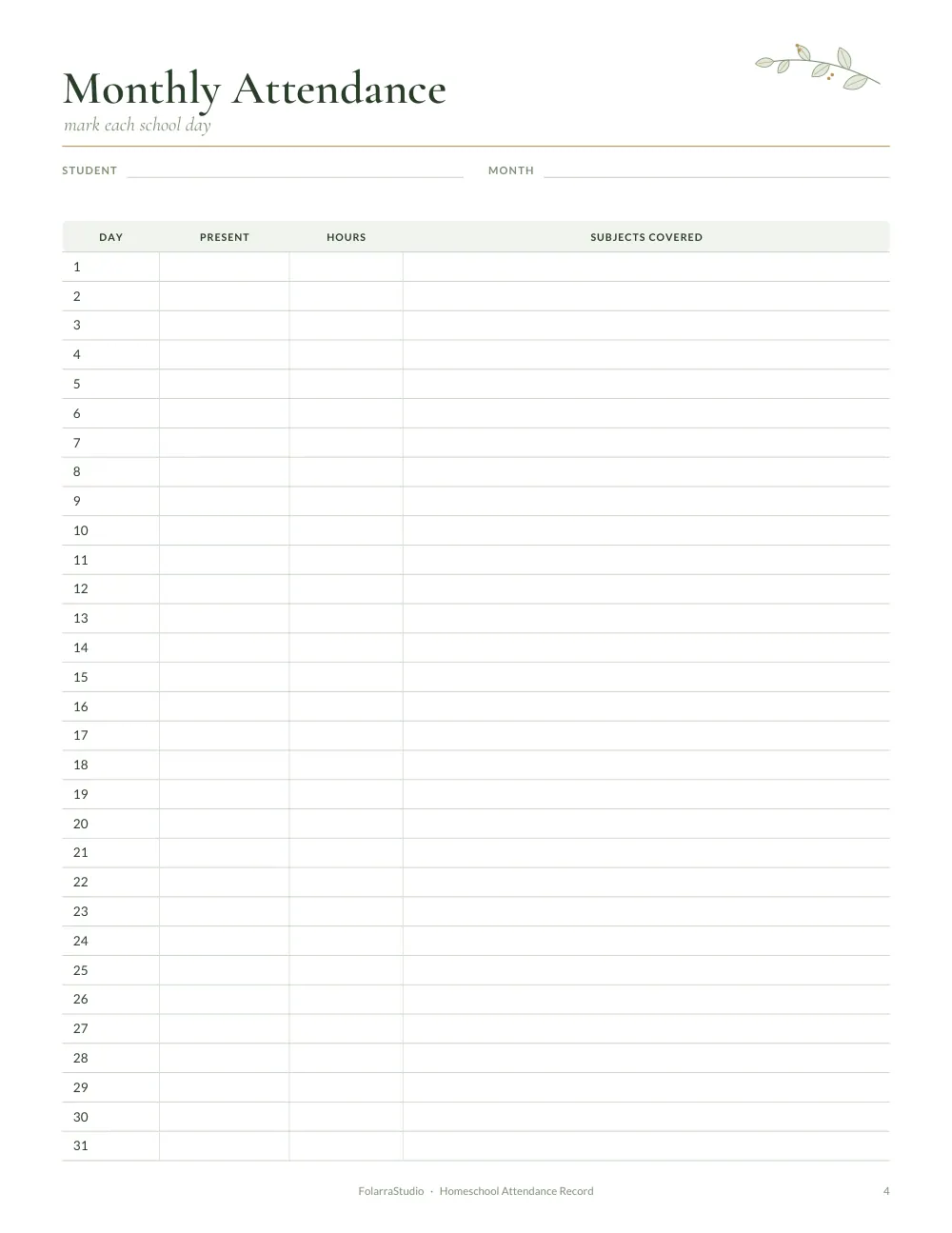
Where homeschool records are required, attendance is often the easiest to keep and the hardest to recreate later. Mark each school day on the Homeschool Attendance Record at the end of the day, or during your weekly planning time. It takes seconds and gives you a clear record for the year. Even where records are not required, an attendance page shows how much learning happens, which is encouraging on harder weeks.
Build a portfolio little by little
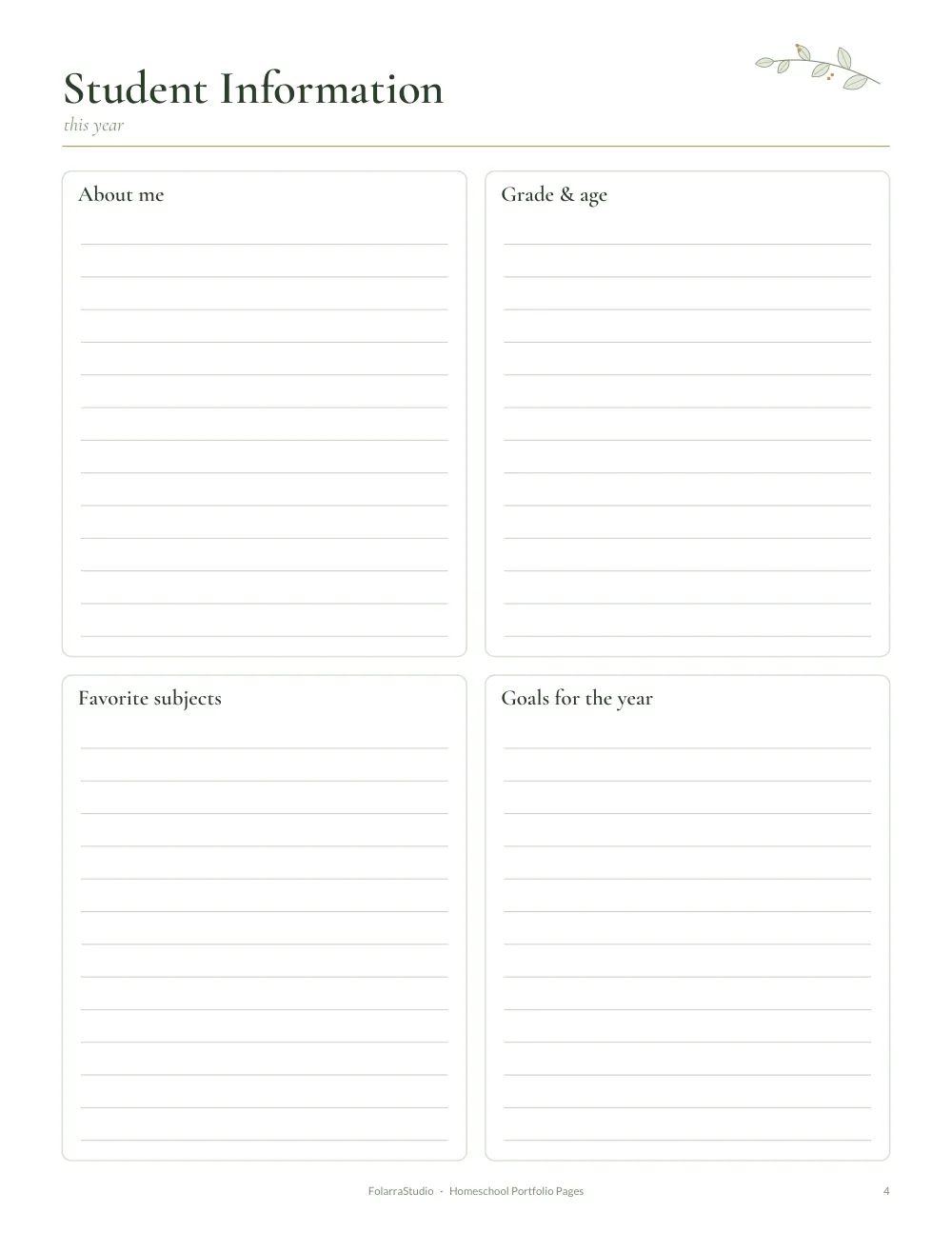
A portfolio is a collection of samples that shows your child's progress over the year: writing samples, math pages, art, photos of projects and lists of books read. Instead of gathering everything at the end of the year, add one or two samples each week. Use Homeschool Portfolio Pages as covers and summary pages for each subject, and slip samples behind them in a binder. By the end of the year, you will have a beautiful record with almost no extra work.
For older students, keep a running list of courses, credits and grades on a Homeschool Transcript Template, updated each semester. It is much easier than reconstructing four years of high school later.
What does a sample week look like?
Here is one example of a relaxed weekly rhythm for a family with children aged six and ten:
- Monday to Thursday mornings: morning basket, math for each child, reading and writing, then a together unit study lesson.
- Monday to Thursday afternoons: chores, outdoor play, art practice and free reading.
- Friday: nature walk or field trip, art project, catch-up lessons and weekly planning for the parent.
Adjust it to your family's energy, faith and commitments. Families who include religious studies can add a short daily block, and the Islamic Studies Homeschool Planner is one example of a planner designed for that.
What if the week goes off track?
Every homeschool family has weeks when illness, new babies, moves or bad moods take over. A weekly plan makes it easy to see what was missed and simply move it forward. Rather than trying to catch up everything, choose the most important lessons, usually math and reading, and let the rest wait for a quieter week. Learning continues through reading aloud, conversations and everyday life.
Learning together with others
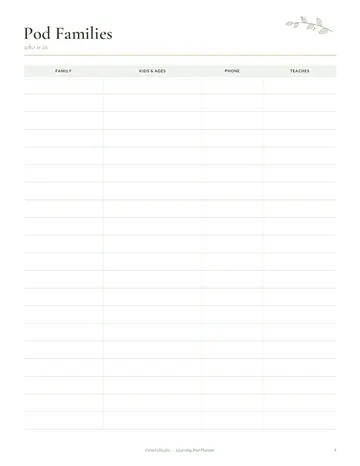
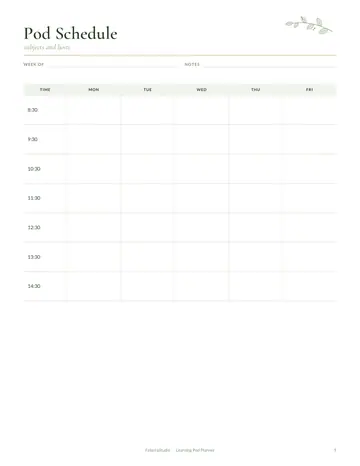
If you join a co-op or learning pod, keep its schedule, classes and contacts on separate pages. A Learning Pod Planner helps parents share teaching duties and plan group activities.
How do you plan one week for three children?
Here is how a planning session can look for a family with three children aged five, eight and twelve. The parent sits down on Sunday afternoon with the Homeschool Planner and about forty minutes to spare.
Step one: the fixed points
First, the parent writes in everything that cannot move: a co-op class on Tuesday morning, a library visit on Thursday and a dentist appointment on Friday afternoon. These go in the weekly overview before any lessons, because the lessons have to fit around them.
Step two: core skills for each child
Next comes a short line for each child's daily core work:
- Five-year-old: phonics practice and counting to twenty, about twenty minutes a day.
- Eight-year-old: a reading lesson, spelling list and math facts, recorded on the Math Facts Tracker.
- Twelve-year-old: a math chapter, a writing assignment and independent reading.
Step three: one shared subject
The family is in the middle of a Unit Study Planner on the water cycle. The plan lists a read-aloud on Monday, an evaporation experiment on Wednesday written up in the Kids Science Journal, and a nature walk to a nearby stream on Friday morning. All three children take part at their own level: the youngest draws, the middle child labels a diagram, and the oldest writes a short report.
Step four: records
Each evening, the parent ticks the days in the Homeschool Attendance Record and drops one piece of work from each child into the Homeschool Portfolio Pages.
How the week actually went
On Wednesday, the experiment took longer than planned and math was skipped. Instead of trying to catch up that night, the parent moved the missed lesson to Thursday afternoon and shortened the library visit. That is the point of planning a rhythm rather than a rigid timetable: one change does not break the week.
Start small
You do not need a perfect system on day one. Print a weekly page and an attendance record, try a simple morning rhythm for two weeks, and adjust. Over time, your routine will grow into something that fits your children and your home.
Homeschool weekly routine: your questions
How many hours a day should we homeschool?
Most families homeschool for two to four focused hours a day, depending on the children's ages. Young children often need only one to two hours of formal lessons, while older students may need four or more. Check your local homeschool law for any required hours or days, and record them on an attendance sheet.
Do we have to homeschool five days a week?
No, many families homeschool four days a week and use the fifth day for field trips, co-ops or catch-up. What matters is a steady rhythm and meeting any legal requirements where you live. A four-day week with a lighter fifth day often feels calmer and is easier to keep up for the whole year.
What should a homeschool weekly plan include?
A homeschool weekly plan should include core lessons for each child, together subjects such as unit studies, outings and appointments, and a short note of what was done each day. Add attendance if your state requires it. Keep it on one page so the whole week is visible at once.
How do I homeschool children of different ages together?
Teach together subjects such as history, science and read-alouds to all children at once, and give each child their own short lessons in reading, writing and math. Older children can work independently while you help younger ones. A shared weekly plan shows who is doing what each day.
Read next: How to Print Planner Pages at Home and A4 vs US Letter: Which Planner Size Should You Print?.
Sources and further reading