Guide · 6 min read
How to Make a Cleaning Schedule That Actually Sticks
A cleaning schedule is a written plan that spreads housework across daily, weekly and monthly tasks. To make a cleaning schedule that sticks, start with a short daily list, give each weekly task its own day, share chores with the family and reset kindly when life gets busy.
Make a cleaning schedule that sticks: split tasks into daily, weekly and monthly lists, assign them to days, share chores and keep the home calm.

Most cleaning schedules fail for the same reason: they are too ambitious. A beautiful chart that asks you to clean every room every day lasts about a week. A schedule that sticks is built around your real life, splits big jobs into small ones and shares the work. This guide shows how to create a cleaning routine you can keep, using a few printable pages.


How does your home really work?
Before writing any schedule, walk through your home and notice what actually gets messy. Is it the kitchen counters, the entryway, the bathroom sink or the laundry pile? Think about your week too. When do you have ten spare minutes, and when do you have an hour? A parent with toddlers, a student in a shared apartment and a retired couple will each need a very different schedule.
How often should each task be done?
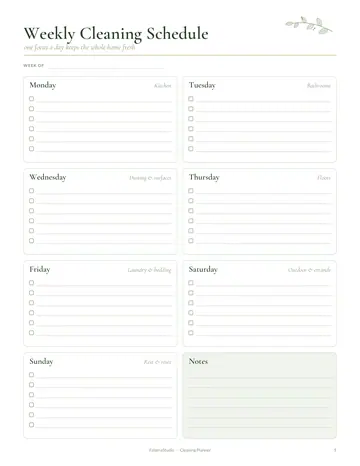
The heart of a good cleaning schedule is sorting tasks by how often they need doing. A Cleaning Planner has separate pages for each level.
Daily tasks (15 to 20 minutes)
Keep this list short, just the things that make the biggest difference:
- Wash dishes or run the dishwasher.
- Wipe kitchen counters and the stove.
- Quick tidy of the main living area.
- Deal with the mail and paper clutter.
- Start or fold a load of laundry if needed.
Weekly tasks (one to two hours in total)
Spread these across the week rather than doing them all at once:
- Vacuum and mop floors.
- Clean bathrooms.
- Change bed linens.
- Dust surfaces.
- Empty all trash bins.
- Wipe out the fridge before the weekly shop.
Monthly and seasonal tasks
These are the jobs that are easy to forget: cleaning the oven, washing windows, wiping baseboards, vacuuming under furniture, cleaning the dishwasher filter and washing pillows. Write them on a monthly checklist and do one or two each week, so they never pile up.
Which tasks go on which day?
Now give each weekly task a day. One popular approach is a room a day:
- Monday: bathrooms.
- Tuesday: dusting and living areas.
- Wednesday: floors.
- Thursday: kitchen deep clean and fridge.
- Friday: bedrooms and linens.
- Saturday: one monthly task and errands.
- Sunday: rest.
Each day then needs only twenty to thirty minutes on top of the daily basics. If your weekends are busy, move tasks to weekdays, or the other way around. The best schedule is the one that fits your week.
How do you share the work?
Cleaning goes much faster when everyone helps. Hold a short family meeting, list all the tasks and let people choose some they do not mind. For adults and teens, a Chore Chart for Adults makes it clear who does what. For children, a Kids Chore & Reward Chart turns jobs into a game, with a sticker or point for each one completed.
Match chores to age. Young children can put toys away, match socks and wipe low surfaces. Older children can vacuum, empty bins and help with dishes. Teenagers can clean bathrooms and do their own laundry. A Family Command Center Printables set keeps the chore chart, calendar and weekly meals together in one visible spot.
How do you keep laundry manageable?
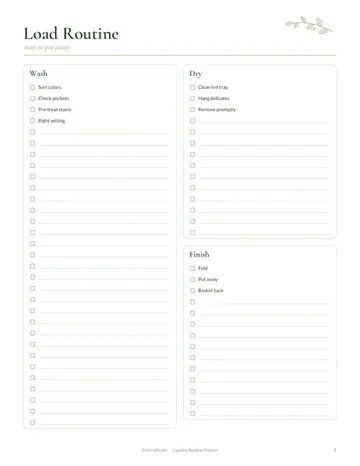
Laundry deserves its own plan because it never stops. A Laundry Routine Planner helps you choose a rhythm, such as one load a day or two laundry days a week, and assign each family member a day for their own load. Folding and putting away immediately is the real secret: a basket of clean clothes left for days quickly becomes a mountain.
Keeping track of sheets and towels also helps. A Linen and Bedding Inventory shows what you have for each bed and bathroom, so you can rotate sets and know when something needs replacing.
Declutter to clean faster
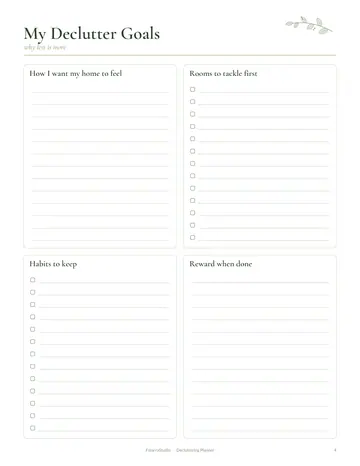
The less you own, the less there is to clean. If surfaces are covered and cupboards overflow, start with decluttering before building your schedule. A Decluttering Planner breaks it into small areas, such as one drawer, one shelf or one corner a day, with a 30-day challenge to keep you going. Even fifteen minutes a day makes a visible difference within a month.
Keep track of home maintenance
Cleaning and maintenance go together. While cleaning, you will notice things like a dripping tap, a dusty air filter or a smoke alarm that needs a battery. Note them in a Home Maintenance Log with the date, so repairs and replacements happen on time and you have a record for the future.
Tips for sticking with it
- Start small. Begin with the daily list only. Add the weekly schedule after two weeks, once the basics feel easy.
- Use a timer. Set fifteen minutes and clean as much as you can. It is surprising how much gets done.
- Pair cleaning with something pleasant. A podcast, an audiobook or a phone call with a friend makes chores go faster.
- Keep supplies where you need them. A small set of cleaning supplies in each bathroom saves time.
- Do not aim for perfect. A home that is mostly tidy most of the time is a great result.
- Reset when life happens. Illness, new babies and busy seasons will interrupt your routine. Simply start again with the daily list.
What does a cleaning schedule look like for a two-bedroom apartment?
To see how the pieces fit together, picture a couple who both work full time and share a two-bedroom apartment with a toddler. Their old approach was to clean everything on Saturday, which used up most of the weekend and still left the kitchen messy by Tuesday.
Their daily reset
They agree on fifteen minutes after dinner: dishes washed or loaded, counters wiped, toys back in their basket and a quick sweep of the kitchen floor. One person does the dishes while the other does the tidy, and they swap each week. These tasks go at the top of their Cleaning Planner so they are ticked off every evening.
Their weekly rotation
- Monday: bathroom sink, mirror and toilet.
- Tuesday: laundry for the household, following the Laundry Routine Planner.
- Wednesday: dust surfaces and change the toddler's bedding.
- Thursday: vacuum all rooms.
- Friday: clear out the fridge before the weekend grocery shop.
- Saturday: mop floors and clean the shower.
- Sunday: rest, apart from the daily reset.
Each job takes twenty to thirty minutes, so no single day feels heavy.
Monthly and seasonal jobs
Once a month they choose one bigger task, such as wiping the inside of the kitchen cabinets or washing the windows. Seasonal checks, such as testing the smoke alarm and cleaning the dryer vent, go in the Home Maintenance Log with the date they were done.
What changed after a month
By writing the plan down and spreading the work across the week, their Saturdays were free again, and the kitchen stayed usable all week. They also noticed which tasks they skipped most often. Vacuuming on Thursday kept slipping, so they moved it to Wednesday evening, when they were usually home earlier. A schedule that changes to fit real life is the one that keeps working.
Your first week
Print a cleaning planner, write your daily list and choose a day for each weekly task. Post the schedule where everyone can see it, such as on the fridge, and tick off each task as it is done. By the end of the month, your home will feel calmer, and cleaning will feel like a small, steady habit rather than a weekend-long chore.
Cleaning schedule that sticks: your questions
What should be on a daily cleaning list?
A daily cleaning list should hold only the few tasks that keep the home usable: washing dishes, wiping kitchen counters, a quick tidy of the main room and starting laundry if needed. Keep it to fifteen or twenty minutes. Bigger jobs, such as bathrooms and floors, belong on the weekly schedule.
How do I stick to a cleaning schedule?
You stick to a cleaning schedule by starting small and making it a habit before adding more. Use only the daily list for two weeks, then add the weekly tasks. Set a fifteen-minute timer, pair chores with a podcast or an audiobook, and simply restart the schedule after a busy week instead of catching up.
How long should daily cleaning take?
Daily cleaning should take about fifteen to twenty minutes once your home is in good order. Focus on the tasks that keep the home usable: dishes, counters, a quick tidy and laundry if needed. Leave deeper jobs such as bathrooms and floors for their own day on the weekly schedule.
How do I get my family to help with cleaning?
Give each family member a few specific tasks that match their age, and write them on a shared chore chart. Children can make beds, tidy toys and set the table. Rotate jobs every week so no one is stuck with the same chore, and thank people for helping.
Read next: How to Print Planner Pages at Home and A4 vs US Letter: Which Planner Size Should You Print?.
Sources and further reading